Loving Life on the Island: How We Got Here
People ask me what it's really like to live on a Caribbean island.
I think they're expecting an answer involving turquoise water, white sand, palm trees, and sunsets.
And yes, Roatan has all of that. I've lived here for eight years, and some days I still catch a glimpse of that Caribbean blue and think, I really live here.
But here's a little perspective:
I love to swim, and I haven't been in the sea in a month.
Living on an island isn’t the same as vacationing on one.
Living on the island is not an easy feat. Building on the island is not an easy feat. And making your living on the island can be an even harder feat.
But somehow, through all the chaos, this became home.
I Came to Roatan in 2018
I decided during the summer of 2018 that I was moving to Roatán, Honduras.
On September 15, 2018—Honduras's Independence Day—I officially landed on the island to begin my new life.
I had absolutely no idea what that life was going to look like.
I started out doing what I knew: business.
Eventually, I found myself working as an independent business consultant running a very popular beachfront restaurant in West Bay.
Let's just say I couldn't get out of there fast enough.
Along the way, I tried different ways of making a living for myself. At one point, that meant bringing in Nike slides, plus-size women's clothing, and larger-size women's shoes.
You learn pretty quickly here that if you want to make a life, sometimes you simply figure out what people need and find a way to provide it.
I certainly didn't know then that those little ventures would eventually evolve into an apothecary and boutique—or that they were just the beginning of a much bigger story.
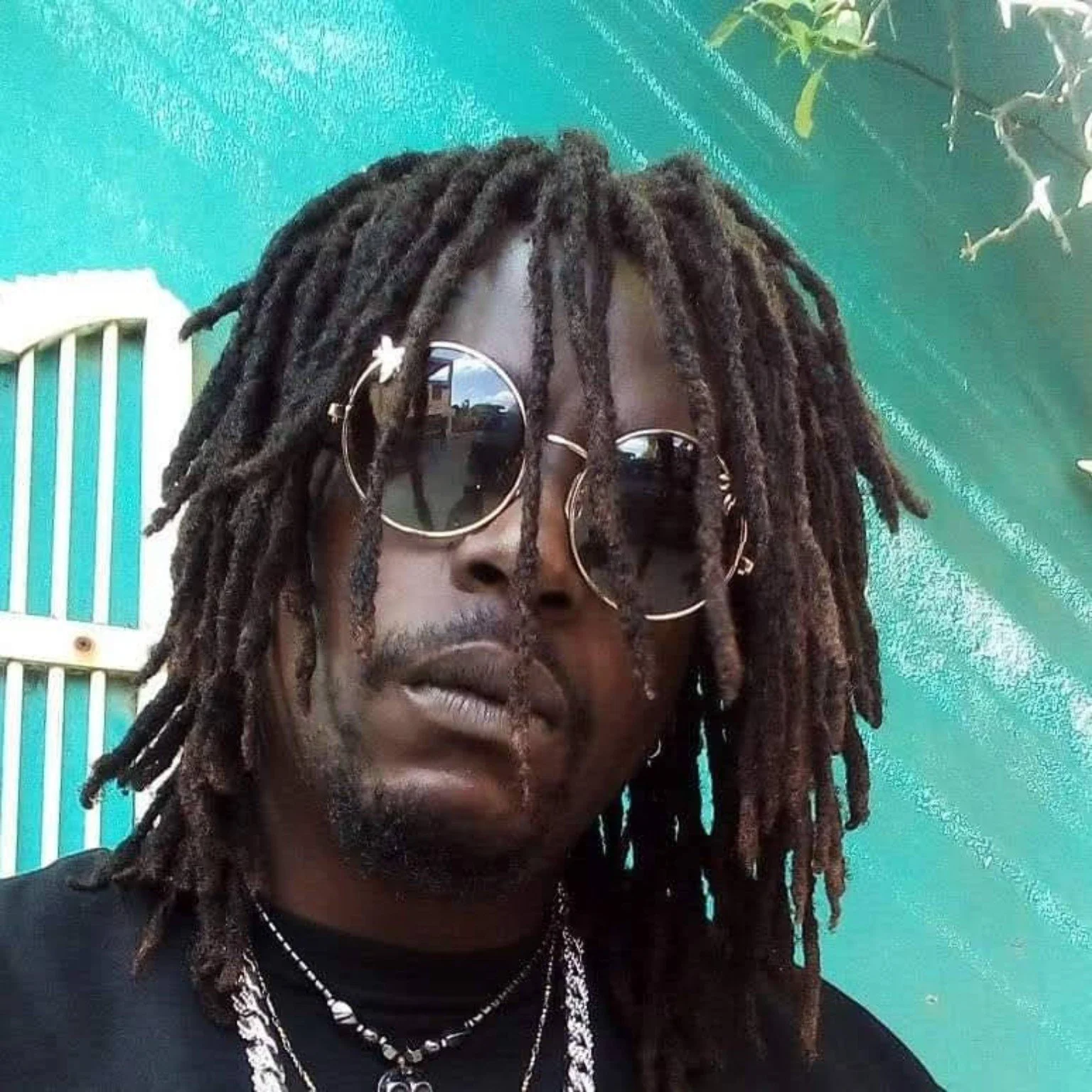
And then, in the summer of 2019, I met Ronal.
Summer 2019
Summer 2019
Then there was Ronal
Ronal is a native islander. He grew up in Coxen Hole, in a community called El Swampo—or, as you'll probably hear us call it, the Pond.
We met in the summer of 2019, and by December, we were living together.
That same month, before we had any idea what was coming for the world, we started what would eventually become Operation Hope.
Our first project was a Christmas toy drive.
My friends and family back in the United States shipped us an incredible amount of donations, and on Christmas Eve we headed into El Swampo with more than 500 Christmas gifts for the children.
That night was an experience I will never forget.
Until then, Ronal had been very protective of me. I'd been into the Pond, but usually it was a quick trip in and out—drop off some money to a family member, deliver a food basket, take care of something and leave.
Christmas was different.
We went in around dark, carrying hundreds of presents, and suddenly I was right in the middle of it.
There were children everywhere. Excited, loud, wild, funny, rough little island kids—and there I was, experiencing Ronal's community in a way I never had before.
I didn't know it then, but that Christmas night was a glimpse of where our lives were about to take us.
We Had a Plan. Then 2020 Happened.
On January 1, 2020, I left my job at the restaurant.
Ronal told me he could hold down the household while I concentrated on helping him grow his tour business.
At the time, his business was essentially what I call a cold-call-at-the-gate business. He met visitors coming off the cruise ships, showed them his island, and earned his living one guest at a time.
I knew business.
Ronal knew Roatán.
We were going to put the two together and build something.
It was a great plan.
For about three months.
Then the world shut down.
Cruise ships stopped coming. Tourism disappeared. The income disappeared with it.
By June, we were basically out of money.
Around my birthday—almost exactly one year after Ronal and I had met—we were being pressured to move out of our house because we couldn't keep up with the rent.
We were facing the possibility of becoming homeless.
And then someone from our very recent past stepped back into our lives.
Sometimes Help Comes From the People You Once Helped
One of Ronal's former tour guests had stayed in touch with us. I had also hosted him at the beachfront restaurant only a few months before the pandemic.
He ran a nonprofit organization in the United States.
Eventually, he got me to stop saying we were okay and tell him exactly how serious our situation had become.
That conversation changed the direction of our lives.
Plans were made to extend some of his nonprofit's work to Roatán, and Ronal and I moved into El Swampo.
And when I say we moved into El Swampo, I mean into El Swampo.
We lived in a tiny concrete room with no running water and no bathroom inside. We had an outdoor outhouse and a large water-holding tank outside.
For this woman from the United States who had been managing a beachfront restaurant in West Bay not very long before, it was quite an adjustment.
But something interesting happened.
We went to work.
We found a location for a soup kitchen. We organized it. We found volunteers.
And we started feeding people.
Hundreds of people.
We bathed babies. We helped families. We did whatever needed doing.
While we were there, we also realized there was another group of people who needed us: elderly and disabled neighbors who couldn't necessarily come to the soup kitchen themselves.
So we went to them.
We had 11 elderly and disabled people who received a hot lunch Monday through Friday, delivered directly to them.
In the middle of a period when Ronal and I had essentially lost everything ourselves, we somehow found ourselves helping take care of other people.
That experience changed both of us.
Then We Started “Camping”
In October 2020, we moved again—this time onto a property that would become another enormous part of our lives.
We've gutted, renovated, managed, and lived all over this property over the years.
I call it camping.
We first lived in a tiny studio that eventually became a commercial kitchen.
Then we moved downstairs into a little one-bedroom setup that didn't even have a living room. We had a bedroom, an office, and a kitchen.
Eventually, we moved upstairs into the main house.
And because apparently our life can never simply involve moving from Point A to Point B, there was a story behind that too.
Ninety Days, a Thank-You Trip and One Very Bad Step
The owner of the property asked Ronal and me to help his adult daughter through a very difficult period in her life.
What was originally expected to be a shorter stay ultimately became 90 days.
She lived with us in the guest bedroom while we were right in the middle of one of the biggest phases of the renovation, with construction crews working around us.
I'll save most of the details of those 90 days.
Let's just say they deserve their own story.
What matters is that when she returned home, she was healthy, sober, feeling good, and in a completely different place from where she'd started.
Her dad was incredibly grateful and wanted to do something special for us as a thank-you.
So after everything we'd been through, he sent Ronal and me away for a relaxing weekend on the mainland.
What could possibly go wrong?
We went to a little family-owned bed-and-breakfast we love in the mountains near Pico Bonito and the Río Cangrejal.
We'd been there before, but this trip was in December. There had been considerably more rain, and the river was running much stronger than we'd experienced on previous visits.
On our second day, Ronal stepped into the river.
I stepped in behind him.
My foot became trapped between the rocks.
And in an instant, my ankle snapped.
Not “I think I sprained my ankle” snapped.
Both bones broken. Bone through the skin. We're-in-the-middle-of-the-mountains-in-Honduras snapped.
So much for our relaxing weekend.
That injury brought surgery, a long recovery, and another complete disruption of life.
Years later, I'm still dealing with some of the effects.
Apparently, even when life gives Ronal and me a weekend off, we can find a way to turn it into an adventure.
Designing, Building and Learning the Island Way
Somewhere in all of this, another part of my professional life followed me to Roatán: interior design.
I'm an interior designer, and over the years I've taken on several substantial design and renovation projects here on the island.
Designing and building on an island, however, is an entirely different experience.
Modern, American-style homes are becoming much more common on Roatán, but many of the products, appliances and construction methods used in those homes are still relatively new to the local building industry.
Something as ordinary as installing a dishwasher can turn into an adventure.
Materials aren't always readily available. Something you need may have to come from the mainland—or another country altogether. And when you're introducing a product or construction method that a crew hasn't worked with before, being the interior designer can quickly turn into being the designer, project manager, purchasing department, problem solver, and occasional construction instructor.
I've completed some beautiful projects here, and I'm proud of them.
I've also officially decided I'm retiring from interior design.
Building and renovating on an island will test a person's character. Mine has been sufficiently tested.
The relationship with the owner of the property where we live also became much more than the circumstances that originally brought us here.
Over the years, I've become his business consultant, interior designer, and website designer, while Ronal and I have also managed his property here on the island.
What began with someone helping us through one of the hardest periods of our lives eventually became a long-term business relationship and friendship that has lasted for years.
And now, the very property where we rebuilt so much of our life is for sale.
Life really does have a funny way of coming full circle.
Operation Hope Never Really Went Away
The nonprofit work that originally brought us into the soup kitchen ended in 2022.
But the helping didn't.
Ronal and I, along with local friends, simply continued doing what we could, when we could.
Sometimes that's helping someone repair a roof or replace unsafe stairs.
Sometimes it's a mother who needs groceries for herself and her children.
Sometimes it's clothes, shoes, or school supplies. Sometimes it's helping with tuition.
Operation Hope was never about swooping in and rescuing everybody. We believe in helping people who are also trying to help themselves, meeting needs when they arise and when we're in a position to meet them.
And there is something else that's very important to us.
We don't believe someone's difficult circumstances should become our photo opportunity.
One of the uncomfortable realities of charity and volunteer work is that photographs generate attention, and attention can generate donations.
But Ronal and I have never felt comfortable putting someone's hardship on display to show everyone what we did for them.
So, for the most part, we don't.
If we're helping a mother buy groceries, you probably won't see a photograph of her standing beside the groceries.
If we're helping repair someone's home, we're not going to photograph the conditions they're living in and put them online just to demonstrate that we helped.
And if a family is struggling, their private situation doesn't suddenly need to become public simply because we were fortunate enough to be in a position to help them.
That choice does have a downside.
It makes Operation Hope harder to promote, and it can make raising support more difficult. People understandably want to know where their donations are going, and photographs can tell powerful stories.
So we're continuing to find ways to balance transparency with dignity—showing the work, documenting where resources go, and sharing what we're accomplishing without making vulnerable people feel as though receiving help comes with the price of having their hardship displayed publicly.
Most of what we've done has been quiet.
Behind the scenes.
One family. One neighbor. One need at a time.
And we're okay with that.
We don't have unlimited resources, which is why we've also had to think about how we can make helping our community sustainable instead of depending entirely on whatever Ronal and I happen to have in our pockets.
And strangely enough, the answer may come from another business we never imagined we'd be building when this story began.
From Delivering Meals During a Pandemic to Building a Delivery Platform
Today, we're building Roatán Runner, our multi-vendor delivery and concierge platform.
The easiest way to explain it is probably a bilingual, island-style DoorDash—but we're building it specifically around the realities of Roatán.
And one of the things I'm most excited about adding is Feed Your Neighbor.
The idea takes me right back to those 11 people we delivered hot meals to during the pandemic.
My hope is to use this little business we're building to help fund and support a modern version of that program—connecting people who want to help with neighbors who need a meal.
And we can do it while maintaining the same principle we've had from the beginning:
Feed the neighbor. Protect the neighbor's dignity.
In a strange way, we're finding our way back to where we started.
And Somewhere Along the Way, We Built a Life
The little side businesses I experimented with eventually evolved into an apothecary and boutique.
The man standing at the cruise-ship gate looking for his next tour guest now has a professional private-tour business, a website, online booking, and years of five-star reviews.
Operation Hope is still here.
Roatán Runner is growing.
And we're still building.
Always building.
Businesses. Houses. Websites. Ideas. A family. A future.
Sometimes quite literally with a hammer in one hand and a phone in the other.
And none of it has happened in a straight line.
Paradise Is Still Real. It's Just Not the Whole Story.
Roatan is breathtakingly beautiful.
The culture is beautiful. The people are beautiful. Life is more relaxed in ways I have grown to love.
Sometimes I feel as though I've stepped 30 or 40 years backward in time.
That can be wonderful.
And then I need to accomplish something involving technology, banking, construction, or government paperwork, and it can be considerably less wonderful.
There is also another Roatan beyond the beaches and resorts.
There is real poverty here. There are struggling families. There are neglected communities and people living in circumstances many visitors will never see.
There are also extraordinarily resourceful people, strong communities, entrepreneurs, families taking care of families, neighbors helping neighbors, and people who will find a way to laugh even when there isn't much to laugh about.
Both versions of Roatan are real.
That's one of the reasons we've finally decided to tell our story.
Six Years Later... Better Late Than Never
Ronal and I have been talking about starting a YouTube channel and sharing our life since 2020.
It is now 2026.
Apparently we needed a little time to prepare. 😂
So we're starting here.
Loving Life on the Island will begin as this blog, but eventually it will become our vlog and a weekly look into our life on Roatán.
And this isn't going to be a travel brochure.
It won't be an endless highlight reel of beaches, sunsets and tropical drinks—although you'll certainly see plenty of beaches and sunsets.
You'll see the Roatán we know.
The food.
The people.
The culture.
The businesses we're building.
The ridiculous things that happen while trying to get something accomplished.
The places tourists rarely see.
The community we love.
The beautiful days.
The hard days.
And probably more chaos than either one of us intends to share.
Because this isn't our vacation.
We live here. We work here. We're raising our family here. We're building our future here.
And after talking about sharing it for six years, we're finally ready to bring you along.
Welcome to Loving Life on the Island.
— Kimberly & Ronal